4 Days Punjab Heritage Tour: Chandigarh Amritsar Kapurthala and Patiala

Punjab rewards slow attention. In four days, this private journey moves from Chandigarh’s modernist vision to Amritsar’s sacred glow, then into the princely elegance of Kapurthala and Patiala. It is a compact route, yet it carries centuries of memory: planned cities, Sikh devotion, colonial-era courts, royal palaces, painted halls and generous Punjabi hospitality.
Designed for international travellers, this 4 Days Punjab Heritage Tour is best experienced with a private chauffeur-driven car. Distances are manageable, the pace is comfortable, and the route allows time for unhurried visits, photography, local cuisine and meaningful cultural context.

Tour overview for Chandigarh, Amritsar, Kapurthala and Patiala
This 4-day private Punjab itinerary follows a clear heritage arc: modern Chandigarh, spiritual Amritsar, regal Kapurthala and aristocratic Patiala.
Detail | Private Punjab tour plan |
Route | Chandigarh → Amritsar → Kapurthala → Patiala |
Duration | 4 Days / 3 Nights |
Travel style | Private chauffeur-driven tour |
Best suited for | Culture lovers, luxury travellers, families, couples and first-time visitors to North India |
Key highlights | Rock Garden, Sukhna Lake, Capitol Complex, Golden Temple, Jallianwala Bagh, Wagah-Attari Border, Jagatjit Palace, Qila Mubarak, Sheesh Mahal |
Access notes | Capitol Complex, Jagatjit Palace, Qila Mubarak and Sheesh Mahal visits are subject to opening rules, permissions and visitor access |
Border ceremony | Wagah-Attari ceremony is subject to timings, security rules and crowd conditions |
The visual mood is refined and warm: ivory courtyards, sandstone beige walls, champagne gold domes and charcoal evening silhouettes. The experience feels balanced, polished and rooted in place.
Day 1 in Chandigarh with gardens, lake views and architecture
Chandigarh makes a graceful opening to the journey. Designed as India’s first planned post-independence city, it combines clean geometry, green avenues and modernist architecture with a relaxed pace that suits the first day of travel.
Visit the Rock Garden
Begin at the Rock Garden, created by Nek Chand from industrial and urban waste materials. It is now one of Chandigarh’s most distinctive attractions, with narrow passages, sculpted courtyards, human figures, animal forms and textured walls.
A private chauffeur-driven itinerary allows the visit to remain flexible. Mornings are often pleasant for walking and photography, particularly when the light catches the stone surfaces.
Pause at Sukhna Lake
Sukhna Lake brings a softer rhythm to the day. The promenade is ideal for a gentle stroll, especially near sunset. The setting is simple and calming, with open water, distant hills and local families moving along the lakeside.
For international travellers arriving after a long flight or a domestic connection, Sukhna Lake offers a quiet way to settle into North India without a rushed schedule.
Explore the Capitol Complex if access is available
Chandigarh’s Capitol Complex, associated with Le Corbusier, is a UNESCO World Heritage site and a defining work of modernist architecture. Access may depend on official permissions, operating rules and security procedures.
If entry is available, the visit can include exterior views and guided context around the Assembly, Secretariat and High Court areas. If access is limited, the day can still focus on Chandigarh’s city plan, public spaces and museum experiences.
Overnight: Chandigarh
Day 2 from Chandigarh to Amritsar for sacred heritage and remembrance
The drive from Chandigarh to Amritsar is approximately 225 km and usually takes 4 to 5 hours, depending on traffic, road conditions and comfort stops. With a private chauffeur, the journey can start early and include breaks along the way.
Visit the Golden Temple
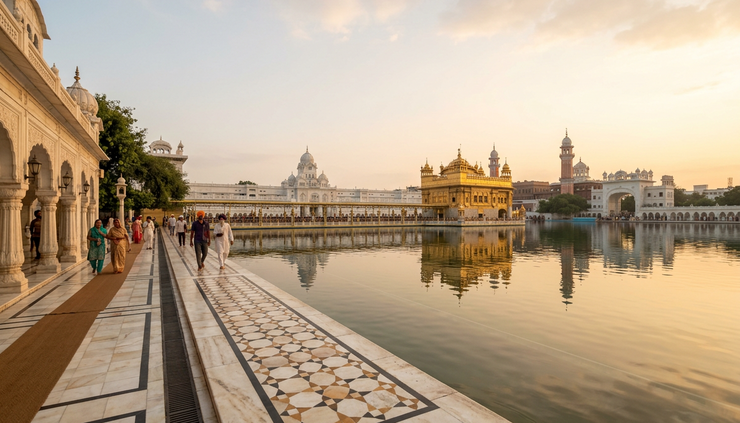
The Golden Temple, also known as Sri Harmandir Sahib, is the spiritual heart of Sikhism and one of India’s most moving places of worship. Its gold-clad sanctum appears to float over the sacred pool, while devotional music fills the complex with a deep sense of calm.
Visitors should cover the head, remove shoes and walk respectfully through the marble surroundings. INDARO’s private travel planning can help with arrival timing, dress guidance and route flow so the experience feels smooth and respectful.
The community kitchen, known as the langar, is central to the Sikh tradition of service. It welcomes people from all backgrounds and offers a powerful glimpse into equality, hospitality and collective devotion.
Walk through Jallianwala Bagh
Close to the Golden Temple, Jallianwala Bagh is a solemn memorial connected to the tragic events of 1919. The site invites quiet reflection. Its preserved walls and memorial spaces mark one of the most painful chapters in India’s freedom struggle.
A visit here should never feel rushed. It offers essential historical context for understanding modern India and the emotional depth of Amritsar.
Attend the Wagah-Attari Border ceremony if timings allow
Later in the day, continue towards the Wagah-Attari Border for the evening ceremony, subject to timings, security arrangements and crowd conditions. The event is known for precise marching, national fervour and a highly charged atmosphere on both sides of the border.
Entry procedures and seating can vary, so flexibility is useful. A private vehicle helps manage the return to Amritsar after the ceremony, especially during peak travel periods.
Overnight: Amritsar
Day 3 from Amritsar to Kapurthala and onward to Patiala
Day 3 turns from spiritual Amritsar towards princely Punjab. Depart after breakfast for Kapurthala, with an approximate planned drive of 25 to 30 km as per the route schedule, allowing extra time where traffic or diversions apply. After the palace visit, continue to Patiala, approximately 110 to 120 km, with travel time shaped by road conditions and stops.

Discover Jagatjit Palace in Kapurthala
Kapurthala is often remembered for its royal refinement. Jagatjit Palace, associated with Maharaja Jagatjit Singh, reflects European influences and the cosmopolitan confidence of Punjab’s princely era.
Access to Jagatjit Palace is subject to visitor rules and permissions, as parts of the property may have restricted use. When access is possible, the palace introduces a different design language: grand facades, formal symmetry and a sense of courtly scale.
This stop is especially valuable for travellers interested in how Indian royal houses engaged with global architectural styles while maintaining local identity.

Continue to Patiala
The onward drive to Patiala offers a gentle transition through Punjab’s towns and countryside. Patiala has a distinct royal personality. It is known for its forts, palaces, textiles, music traditions and signature culinary style.
Arrive in Patiala by evening, with time to rest before the next day’s heritage visits.
Overnight: Patiala
Day 4 in Patiala with Qila Mubarak and Sheesh Mahal
Patiala completes the route with regal architecture and painted interiors. The city has long been associated with the Patiala royal family and carries an old-world character that rewards calm exploration.
Visit Qila Mubarak
Qila Mubarak is one of Patiala’s major heritage landmarks. The complex includes fortified spaces, courtyards and architectural details that reflect the city’s royal and military past.
Opening times and access can change, so the visit should be planned with current local guidance. A chauffeur-driven schedule makes it easier to adjust the sequence if timings shift on the day.
Explore Sheesh Mahal if open to visitors
Sheesh Mahal, often linked with mirror work and royal decorative arts, adds a more intimate dimension to Patiala’s heritage. Its paintings, ornamentation and palace setting reveal the refined court culture of the region.
As with many historic properties in India, entry may depend on conservation work, official schedules or access rules. If Sheesh Mahal is unavailable, the day can be adjusted to include other Patiala heritage experiences.

Departure from Patiala
After sightseeing, continue to the onward departure point as planned. INDARO can arrange private airport transfers, intercity transfers or customised extensions to Delhi, Chandigarh, Rajasthan, Himachal Pradesh or other destinations in India.
Best time to visit Punjab
The most comfortable travel period is generally October to March, when temperatures are cooler and outdoor sightseeing is easier.
October to November Pleasant weather and clear travel conditions, with festive energy in many parts of North India.
December to February Cooler days and cold mornings, especially useful for travellers who prefer mild sightseeing weather.
March Warm but still suitable for heritage travel, especially with early starts.
April to June Hotter conditions require careful planning, shaded breaks and an air-conditioned vehicle.
July to September Monsoon weather can bring rain and humidity, though the countryside may look lush.
Punjabi culture and food to experience along the route
Punjab is generous by nature. Meals are hearty, service is warm, and everyday hospitality often feels deeply personal.
In Amritsar, food is a highlight. Local specialities may include Amritsari kulcha, chole, lassi, phirni and traditional sweets. In Patiala, the experience becomes more aristocratic, with influences from royal kitchens, old bazaars and slow-cooked North Indian flavours.
Cultural etiquette is simple but meaningful:
Cover the head at Sikh religious sites.
Remove shoes before entering the Golden Temple complex.
Dress modestly for places of worship.
Ask before photographing people.
Keep a respectful tone at memorial sites such as Jallianwala Bagh.
Carry a scarf or light stole for religious visits.
The most memorable moments are often quiet: the sound of kirtan at dawn, a cup of tea during a road stop, the glow of palace walls in late afternoon light.
International travel tips for a private Punjab tour
A refined journey through Punjab depends on good pacing. The cities are not difficult to combine, but comfort comes from planning the road days well.
Travel with a private chauffeur
A private chauffeur-driven car is the most comfortable option for this route. It gives door-to-door convenience, secure luggage handling, flexible rest stops and easier access to heritage locations where local timing can change.
Keep documents accessible
Carry a passport copy, visa details and any required identification. Border-area visits, high-security zones and some official sites may require checks.
Plan around access and permissions
Capitol Complex, Jagatjit Palace, Qila Mubarak and Sheesh Mahal may have specific visitor rules. Final access should be checked close to travel dates.
Start early on longer days
Early departures help avoid traffic and give more time at key sites. This is especially useful on the Chandigarh to Amritsar day and for the Wagah-Attari Border ceremony.
Choose clothing for comfort and respect
Light layers work well from October to March. In warmer months, breathable fabrics, sunglasses and sun protection help keep sightseeing comfortable.
INDARO private travel services for Punjab
INDARO designs private India journeys for travellers who value comfort, discretion and a well-paced itinerary. For this Punjab route, services can include:
Private chauffeur-driven cars for the full 4-day route
Airport transfers from Chandigarh, Amritsar, Delhi or other suitable gateways
Self-drive rentals for confident travellers who prefer independent mobility
Customised tours with adjusted pacing, added cities or special-interest experiences
Assistance with route planning, timing and practical travel guidance
INDARO does not need to force a fixed template. The itinerary can be shaped around arrival times, onward flights, walking comfort, photography interests, religious site etiquette and preferred travel rhythm.
FAQs for the 4-day Punjab heritage route
Is four days enough for Chandigarh, Amritsar, Kapurthala and Patiala?
Yes, four days works well for a focused private heritage journey. The pace is best with a chauffeur-driven car and early starts on travel days.
Can the Wagah-Attari Border ceremony be guaranteed?
No. The ceremony depends on timings, security rules, crowd conditions and operational changes. It should be planned with flexibility.
Is the tour suitable for first-time visitors to India?
Yes. The route combines major landmarks, comfortable road distances and strong cultural variety, making it suitable for first-time international visitors.
Are all palaces and historic sites open every day?
Not always. Access to places such as Jagatjit Palace, Qila Mubarak and Sheesh Mahal may vary due to opening hours, permissions or conservation work.
Can this itinerary be customised?
Yes. INDARO can customise the route with airport transfers, added nights, luxury vehicle preferences, self-drive rentals or onward travel within India.
Punjab Heritage Tour – Plan Your Private Journey
Explore Chandigarh, Amritsar, Kapurthala and Patiala with INDARO.
PLAN YOUR PRIVATE PUNJAB JOURNEY
This journey is compact, cultured and deeply rewarding. In four days, it introduces Punjab through sacred devotion, royal architecture, modern design and warm hospitality, with the comfort of private travel throughout.


Comments